Who owns a university?
The institution and the system
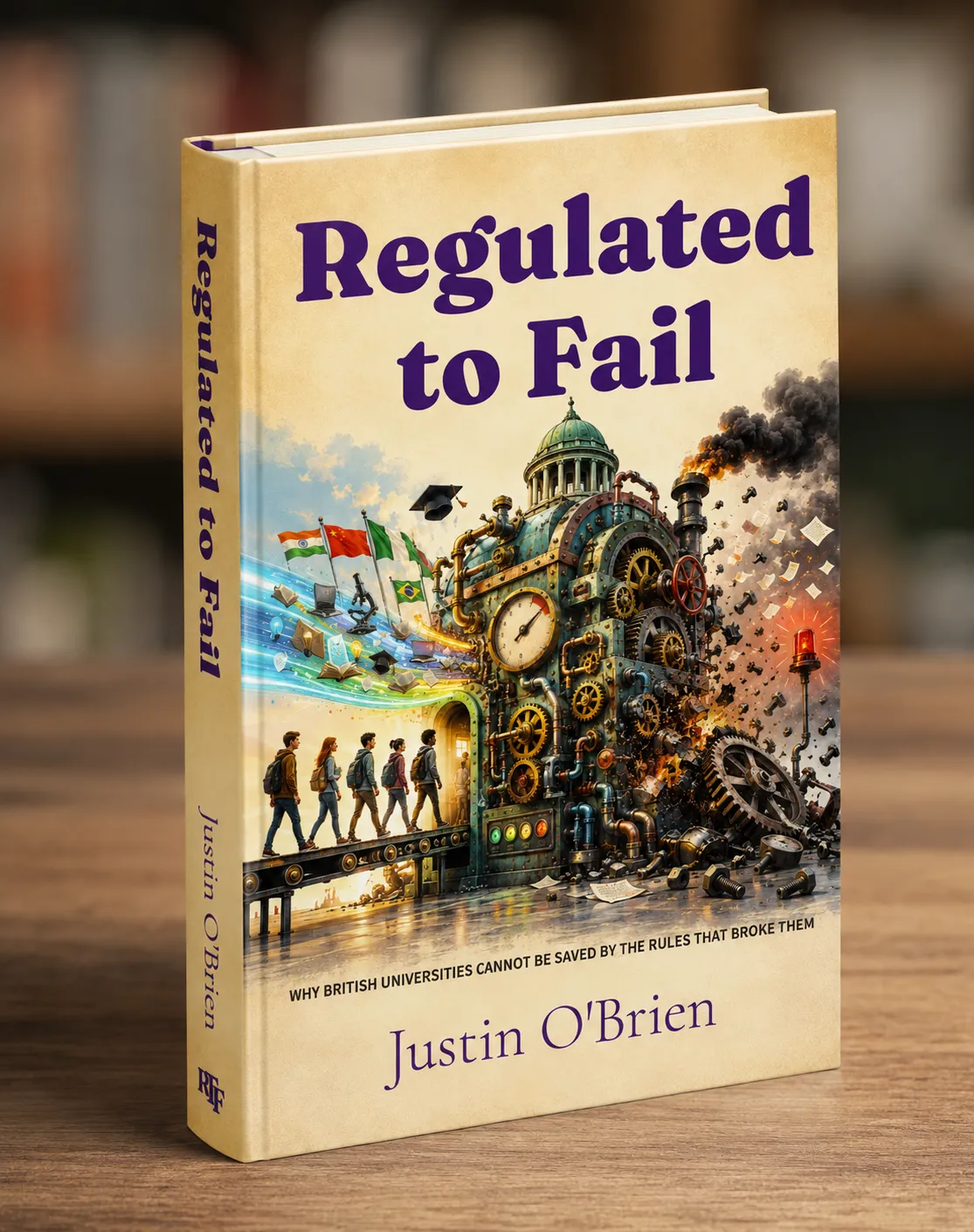
A new book about Britain’s universities
Why British Universities Cannot Be Saved by the Rules That Broke Them
Sources: Annual TRAC 2023–24 (Office for Students) and the2026 tuition fee impact assessment (Department for Education). Every figure on this site is traceable — see the source library.
Start here
22 chapters, 439 sources and the mechanism behind each one. It takes about ten minutes to see the shape of the whole thing.
How universities moved from chartered autonomy into compliance and quasi-market regulation.
Follow the argument →Why the current system cannot pay for itself.
Follow the argument →How Whitehall treats universities as cash machines and controlled utilities at once.
Follow the argument →What the book explains
Start with a concise website explainer, then follow the argument and evidence into the relevant part of the book.
The institution and the system
Income, costs and cross-subsidy
The economics of teaching
The research funding gap
The system’s financial shock absorber
Liquidity, insolvency and market exit
Rules, incentives and identity
Policy and institutional decisions
A route to a sustainable system
The system in six steps
Each step is individually defensible. Together they produce an institution that cannot absorb a bad year.
Beyond the covers
The book is the argument. The website is the evidence, updates and material that would not fit between the covers.
439 sources, chapter by chapter, each with a note on what it contributes.
Examine the evidence →Follow what happened after the manuscript closed.
Read the updates →Visual explanations with transcripts, diagrams and sources.
Browse videos →A selective, annotated route into each major theme.
Continue reading →Latest
A starting point for tracking the cases and mechanisms discussed in the book.
Read update →Placeholder for an update connecting a policy announcement to the real economics of teaching.
Read update →Placeholder showing how a current event should lead back to debt, fixed costs and the failure process.
Read update →